Dental Onlays vs. Crowns: Which Is the Best Option for You?
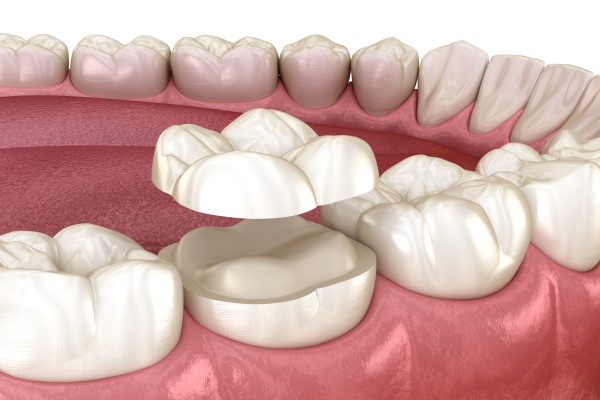
A dental onlay and a crown serve similar purposes—restoring damaged or decayed teeth. However, they differ in their scope, application, and the level of tooth preservation they offer. Choosing between the two often depends on the extent of the damage and the patient's specific needs.
What is a dental onlay?
Dental onlays are custom restorations that repair damage to a tooth's biting surface, or the cusp. Often referred to as a partial crown, dentists employ dental onlays when the damage extends beyond a dental filling's capabilities but does not require a full dental crown. These restorations cover one or more cusps of a tooth while preserving as much of the natural structure as possible. They typically comprise materials such as porcelain, ceramic, or composite resin, ensuring a natural appearance.
Benefits of a dental onlay
Due to its design, a dental onlay is considered the more conservative option between the two restorations. They require less removal of the natural tooth structure than a dental crown. This preservation helps maintain the tooth's strength and integrity. Onlays are primarily beneficial for moderate damage, particularly when only the tooth's cusps are affected. As a bonus, their acquiring process is less invasive, often requiring less preparation time. Additionally, cleaning and general maintenance are simple since onlays are bonded onto the natural teeth.
What is a dental crown?
Alternatively, dental crowns are custom restorations that completely encase the visible portion of a tooth above the gumline. Dentists employ crowns when a tooth is severely damaged or weakened to the point that its structure cannot support an onlay or filling. These restorations provide full protection and restore the tooth's function and appearance. Like onlays, crowns comprise porcelain, ceramic, or composite resin materials that can be closely matched to the color of the patient's surrounding teeth, offering durability and natural aesthetics.
Benefits of a dental crown
As mentioned, dental crowns offer the opportunity to preserve the natural structure of the tooth within the socket. This benefit communicates to the gum tissue and jawbone that they still need to remain intact, eliminating the threat of degeneration. Further, because the crown completely engulfs the tooth, it offers a stronger defense against further damage or exposure to bacteria. Lastly, like onlays, the dentist bonds crowns to the natural teeth, allowing easy care and maintenance.
How dentists choose between a dental onlay and a dental crown
Ultimately, the choice between a dental onlay and crown lies within the extent of damage and overall condition of the tooth. Dentists will conduct a physical examination and order X-rays, as sometimes a tooth can have far more damage than meets the eye. A dental onlay may be better for preserving the tooth if it is moderately damaged but retains enough healthy structure. A crown provides the necessary protection and durability for teeth with severe decay or structural issues.
Acquiring a dental onlay or crown
The process for receiving dental onlays and crowns involves multiple steps to ensure precise restoration and a comfortable fit. It begins with a comprehensive examination of the affected tooth to assess the extent of damage and determine the appropriate treatment. X-rays or 3D imaging can evaluate the tooth's structure and identify any underlying issues. Once the dentist confirms the need for an onlay or crown, the tooth is prepared by removing decayed or damaged portions to create a stable foundation for the restoration.
The dentist will take digital scans of the tooth for both onlays and crowns to ensure a custom fit. The dentist will send these to an offsite dental lab for fabrication using the materials chosen in an initial consultation. While waiting for the permanent restoration, a temporary onlay or crown may be placed to protect the tooth. At the final appointment, the permanent restoration is bonded securely to the tooth, ensuring proper function, aesthetics, and durability.
The importance of restoring natural teeth
Timely treatment of damaged or decayed teeth is crucial to prevent further complications. If left untreated, moderate damage may worsen, requiring more extensive and costly treatments in the future. Addressing dental issues early with the appropriate restoration—whether an onlay or a crown—helps preserve the tooth and maintain oral health.
Preserve your natural teeth
All in all, a dental onlay offers a conservative approach for moderate issues, while a crown provides full protection for more extensive damage. By working closely with our dentist, you can choose the option that effectively restores your smile and supports long-term oral health. Contact Dental Associates of Westminster to schedule an appointment today.
Request an appointment here: https://dentalassociatesofwestminster.com or call Dental Associates of Westminster at (303) 731-5715 for an appointment in our Westminster office.
Check out what others are saying about our services on Yelp: Dental Onlay in Westminster, CO.
Related Posts
Dental crowns play a central role in modern restorative dentistry, offering durable protection for damaged teeth while restoring natural function. Anyone preparing for this treatment benefits from understanding the steps involved in the dental crown process and the advantages it provides.The dental crown process begins with an examination performed by a dental professional. During this…
An implant crown is one of the most popular solutions for replacing a missing tooth, as it restores optimal function and aesthetics. Unlike traditional crowns that rely on existing teeth for support, an implant crown is securely attached to a dental implant, which acts as an artificial tooth root. While this tooth replacement is an…
A dental bridge can replace a missing tooth without surgery and often restores comfort and appearance quickly. Although dental implants provide a strong, long-term option for many patients, they do not fit every timeline, budget, or health situation. A general dentist typically compares bone support, gum health, bite forces, and the condition of nearby teeth…
Helping younger patients establish healthy dental habits starts with the right environment and guidance. From the first visit, a dental practice has the opportunity to set the stage for positive oral care habits that will last into adulthood. The approach taken during these early years can make a big difference in how children view oral…